Conducting a Den Meeting
Den meetings are conducted at a date, time, and location that is best for families that are in the den. How often and for how long a den meets is also up to each den. The den should meet as frequently as necessary to ensure that, at minimum, each Cub Scout in the den has the opportunity to earn their badge of rank.

Preparing for a Den Meeting
Before you conduct a den meeting, complete the online training for Den Leader found at my.scouting.org.
To prepare for a den meeting simply identify a Cub Scout Adventure that you want to complete. Adventures are found in each of the grade-specific handbooks. It is recommended that you focus on the required Adventures first.
If this is your first den meeting for the year with new and returning Cub Scouts, the Bobcat Adventure is designed to be done as your first required Adventure.
Once you have chosen the Adventure to work on for your den meeting review the webpage for that Adventure. You can get to it by scanning the QR code in the Cub Scout handbook or by following the links below.
Parts of a Den Meeting
There are three parts to a den meeting. Before the meeting, during the meeting, and after the meeting
Before the Meeting
- Identify which Cub Scout Adventure you want to work on.
- Review the webpage for the Adventure which includes the Safety Moment, the Safety Moment highlights the key items you need to know to conduct the Adventure safely, the requirements for the Adventure, and recommended activities to complete each requirement.
- Identify the activities you will do during your den meeting. Gather the necessary supplies and complete the “Before the Meeting” action items.
During the Meeting
- Opening – Conduct an opening ceremony that includes the pledge of allegiance, the Scout Oath, and Scout Law.
- Activities – Complete the activities you chose to complete the requirements for the Adventure.
- Recognition – If the requirements for an Adventure are completed, recognize each Cub Scout with the Adventure Loop or Pin as instant recognition.
- Closing – Conduct a formal closing using the living circle, make any announcements or reminders, and the den leader may close with a reflection that focuses on a value of the Scout Oath or Scout Law.
After the Meeting
- Review – The den leader, assistant den leader, and other adults who helped with the meeting review how the meeting went and take any notes for improvement for the next meeting.
- Thank You – The den leader sends thank you notes to those adults who helped with the meeting.
- Record – The den leader records the requirement that were completed at the meeting in Scoutbook.

Camping
What is Summer Camp?
What is Summer Camp?
What is Summer Camp?

Cub Scout Resident Camp (Overnight): A 3-to-5-day experience at a Scout-managed facility where Scouts and parents/guardians stay overnight, focusing on outdoor adventure and earning advancements.
Cub Scout summer camp is a structured,, outdoor adventure program designed for children in 1st–5th grade (Lions-Arrow of Light Scouts) to build skills, confidence, and friendships.
Offered as a 3-day & 2 night overnight resident camps or day camps, it features activities like BB guns, archery, swimming, hiking, and STEM, usually held from June through August.
Day Camps
What is Summer Camp?
What is Summer Camp?
Cub Scout Day Camp: A 1-to-5-day program typically running
9 a.m. to 4 p.m., offering similar activities to resident camp but allowing children to return home each evening.
Family Camp Weekends
What is Summer Camp?
Short, weekend overnight experiences focused on, family-friendly activities.
Annual Health and Medical Record
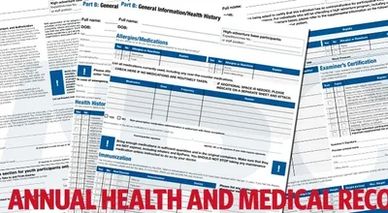
All camping adventures require a medical record to be available in case of an emergency.
Events less-than 72 hours long do not require a physical from a physician. physician assistant, or nurse practitioner.
Central Registry Clearance Request
Central Registry Clearance Request

The Child Care Background Check Unit within the Michigan Department of Lifelong Education, Advancement, and Potential (MiLEAP) has implemented a new process for obtaining a central registry clearance, which is required for staff members (18 years and older) and unsupervised volunteers, i.e., leaders and visitors, (21 years of age or older) at camp. The new process is simple, free, and can be done completely online.